Be sure to click on any thumbnail image below to get a detailed view of each picture!
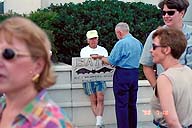 On July 18, 1998, Bat Conservation International (BCI), the world's leading bat-related awareness and protection organization, sponsored a trip to Bracken Cave,
the home of the world's largest bat colony! The cave is about 60 miles southwest of my home, Austin, Texas, but quite close to San Antonio, so the tour group assembled at Rolling Oaks Mall in the San Antonio outskirts.
On July 18, 1998, Bat Conservation International (BCI), the world's leading bat-related awareness and protection organization, sponsored a trip to Bracken Cave,
the home of the world's largest bat colony! The cave is about 60 miles southwest of my home, Austin, Texas, but quite close to San Antonio, so the tour group assembled at Rolling Oaks Mall in the San Antonio outskirts.
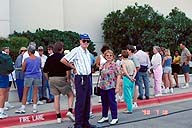 Our gracious host and tour guide was Church's Chicken magnate and bat enthusiast J. David Bamberger, who owns property in the area and also sponsors the Chiroptorium,
an experimental artificial bat cave recently built a few miles to the north. Mr. Bamberger seemed really nice and helpful, patiently gathering the BCI members and their families and briefing them in the mall parking lot before departing for the cave.
Our gracious host and tour guide was Church's Chicken magnate and bat enthusiast J. David Bamberger, who owns property in the area and also sponsors the Chiroptorium,
an experimental artificial bat cave recently built a few miles to the north. Mr. Bamberger seemed really nice and helpful, patiently gathering the BCI members and their families and briefing them in the mall parking lot before departing for the cave.
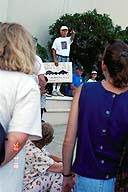 The main issues in the briefing were
the lack of food and water at the cave, the rustic charm of the on-site outhouse, the possible need for bug repellent, and the need to be as quiet as possible so as not to disturb the bats. The group itself was a fairly diverse group of bat-lovers,
many older people, but a few kids were in the group as well. The main issues in the briefing were
the lack of food and water at the cave, the rustic charm of the on-site outhouse, the possible need for bug repellent, and the need to be as quiet as possible so as not to disturb the bats. The group itself was a fairly diverse group of bat-lovers,
many older people, but a few kids were in the group as well.
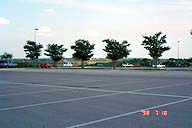 After the briefing, the group departed in a convoy of personal vehicles, carefully
led and followed-up by the official BCI hosts. The cave was a fairly short drive away from the mall, through a surprisingly developed area, with a race track, a small town, and even a theme park (Natural Bridge Cavern and Wildlife Ranch), all
within a very short drive of the cave. After the briefing, the group departed in a convoy of personal vehicles, carefully
led and followed-up by the official BCI hosts. The cave was a fairly short drive away from the mall, through a surprisingly developed area, with a race track, a small town, and even a theme park (Natural Bridge Cavern and Wildlife Ranch), all
within a very short drive of the cave.
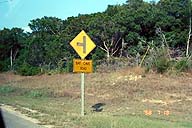 On our way to the cave site we passed this sign for "Bat Cave Road", which, curiously
enough, does not lead to the bat cave. The cave itself is on private property that can only be reached through a locked gate, then a rough gravel road leads to the cave site. On our way to the cave site we passed this sign for "Bat Cave Road", which, curiously
enough, does not lead to the bat cave. The cave itself is on private property that can only be reached through a locked gate, then a rough gravel road leads to the cave site.
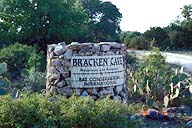 Bat Conservation International built a neat sign out of rocks at
the last turn into the cave area, announcing their association with the Bracken Cave bat colony preservation project. Bat Conservation International built a neat sign out of rocks at
the last turn into the cave area, announcing their association with the Bracken Cave bat colony preservation project.
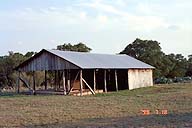 There is a cluster of rustic-looking wooden buildings off of the small parking area. The main building
is the guano hut, which is used to process bat droppings for later use as fertilizer and a base for hygiene products. There is a cluster of rustic-looking wooden buildings off of the small parking area. The main building
is the guano hut, which is used to process bat droppings for later use as fertilizer and a base for hygiene products.
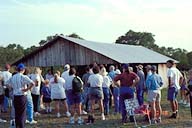 Mr. Bamberger and BCI Associate Executive Director Steve
Walker gave a little "state of the organization" speech, focusing on their successful cost-control efforts, which include limiting BCI executive salaries so as much money as possible will go directly to saving bats, not buying Porsches and
first-class plane tickets for the guys at the top. Mr. Bamberger and BCI Associate Executive Director Steve
Walker gave a little "state of the organization" speech, focusing on their successful cost-control efforts, which include limiting BCI executive salaries so as much money as possible will go directly to saving bats, not buying Porsches and
first-class plane tickets for the guys at the top.
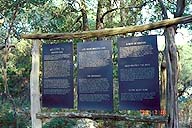 A little trail leads up a low hill to the cave itself. BCI members have put up a sign at
the top of the trail explaining some cave history and the importance of proper cave etiquette, mainly staying as quiet as possible, and warning visitors not to touch grounded bats. A little trail leads up a low hill to the cave itself. BCI members have put up a sign at
the top of the trail explaining some cave history and the importance of proper cave etiquette, mainly staying as quiet as possible, and warning visitors not to touch grounded bats.
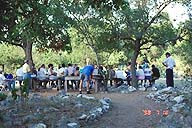 At the end of the trail is a cluster of benches for members to sit on while waiting for the emergence, which happens
of course at sundown. A BCI staffer gave us some more background on the cave and BCI's preservation efforts. At the end of the trail is a cluster of benches for members to sit on while waiting for the emergence, which happens
of course at sundown. A BCI staffer gave us some more background on the cave and BCI's preservation efforts.
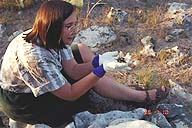 During the talk, BCI Educational Resources
Coordinator Angela England discovered a dead bat behind the discussion area. She was unable to immediately tell what caused the bat's death, since it didn't have any obvious injuries or signs of disease. She said it was very stiff because of rigor mortis,
which bats apparently get as well as humans. During the talk, BCI Educational Resources
Coordinator Angela England discovered a dead bat behind the discussion area. She was unable to immediately tell what caused the bat's death, since it didn't have any obvious injuries or signs of disease. She said it was very stiff because of rigor mortis,
which bats apparently get as well as humans.
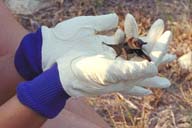 The trained researcher handled the dead bat, but only with thick gloves and
the protection of education and experience. Most people should never handle grounded bats, since they may be diseased, and it is possible for humans to contract some illnesses from close contact with bats. The trained researcher handled the dead bat, but only with thick gloves and
the protection of education and experience. Most people should never handle grounded bats, since they may be diseased, and it is possible for humans to contract some illnesses from close contact with bats.
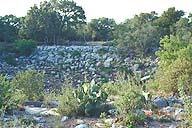 The cave itself sits at the bottom of a
big sinkhole, which was formed when the top roof of the cave collapsed inward. It looks kind of like a meteor crater, but the oval hole at the bottom gives away the cave's presence. The cave itself sits at the bottom of a
big sinkhole, which was formed when the top roof of the cave collapsed inward. It looks kind of like a meteor crater, but the oval hole at the bottom gives away the cave's presence.
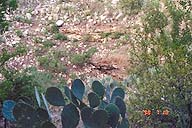 There is quite a bit of natural flora along
the edge of the depression, including some nice cactus and lots of Texas' famous scrub brush that seems to love this rough, rocky country. Some of these plants are apparently edible, since we observed a herd of cows grazing on some private property only a
few feet from the cave! There is quite a bit of natural flora along
the edge of the depression, including some nice cactus and lots of Texas' famous scrub brush that seems to love this rough, rocky country. Some of these plants are apparently edible, since we observed a herd of cows grazing on some private property only a
few feet from the cave!
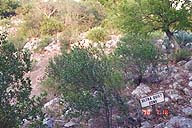 Another view
down into the sinkhole is marked with an "Ultra-quiet zone" sign, informing visitors that any sound made in that area directly reflects into the cave itself, possibly disturbing the bats, and decreasing the number of bats willing to fly out and put
on a show. Another view
down into the sinkhole is marked with an "Ultra-quiet zone" sign, informing visitors that any sound made in that area directly reflects into the cave itself, possibly disturbing the bats, and decreasing the number of bats willing to fly out and put
on a show.
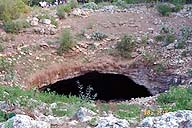 On the other side of the depression is a less formal viewing area, with just some rocks
to sit on, but providing a fantastic view right into the cave entrance. We could hear some bats starting to stir and flit about the cave entrance long before the main emergence began. I don't have any closer shots than this because 1) I didn't have a telephoto
lens, and 2) only expert spelunkers and bat researchers are allowed into the cave. On the other side of the depression is a less formal viewing area, with just some rocks
to sit on, but providing a fantastic view right into the cave entrance. We could hear some bats starting to stir and flit about the cave entrance long before the main emergence began. I don't have any closer shots than this because 1) I didn't have a telephoto
lens, and 2) only expert spelunkers and bat researchers are allowed into the cave.
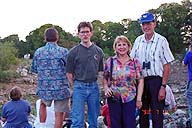 As we waited quietly for the emergence, I had time to try out
the remote control on my new camera by snapping an action photo of me (Brent A. Thale, green bat shirt and jeans in the middle), Mom (Colleen Thale, multi-color blouse), and Dad (Bruce A. Thale, white shirt and bat cap). As we waited quietly for the emergence, I had time to try out
the remote control on my new camera by snapping an action photo of me (Brent A. Thale, green bat shirt and jeans in the middle), Mom (Colleen Thale, multi-color blouse), and Dad (Bruce A. Thale, white shirt and bat cap).
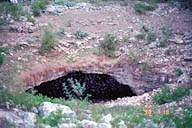 As daylight began to fade, the emergence began
in force! First, the concentration of bats around the entrance of the cave greatly increased. The individual bats began zipping out over our heads and into the night sky. (You might need to click on the thumbnail at right to get a more detailed view to actually
see the bats in the cave mouth.) As daylight began to fade, the emergence began
in force! First, the concentration of bats around the entrance of the cave greatly increased. The individual bats began zipping out over our heads and into the night sky. (You might need to click on the thumbnail at right to get a more detailed view to actually
see the bats in the cave mouth.)
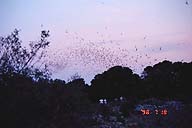 Finally the main stream of bats
began pouring out of the cave entrance! The bats continued in an almost constant wave streaming out of the cave for quite some time after it began, proceeding even after it became too dark to see anything. Finally the main stream of bats
began pouring out of the cave entrance! The bats continued in an almost constant wave streaming out of the cave for quite some time after it began, proceeding even after it became too dark to see anything.
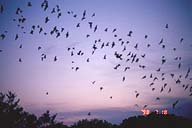 As the emergence continued, I had plenty
of time to reposition my tripod and get some more good photos from other angles. I was pleased with the pictures I got, even though the bats seem to be coming out later than usual, waiting until almost total darkness to emerge. As the emergence continued, I had plenty
of time to reposition my tripod and get some more good photos from other angles. I was pleased with the pictures I got, even though the bats seem to be coming out later than usual, waiting until almost total darkness to emerge.
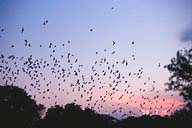 As many as 20 million Mexican Free-tailed bats call Bracken
Cave home, but this emergence seemed like it didn't have that many bats participating, possibly because this year's baby bats were not flying on their own yet. There were still plenty of bats, though. As many as 20 million Mexican Free-tailed bats call Bracken
Cave home, but this emergence seemed like it didn't have that many bats participating, possibly because this year's baby bats were not flying on their own yet. There were still plenty of bats, though.
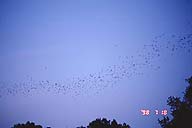 As the darkness of night overcame my camera's
ability to take pictures, I snapped one more photo of the bats flying away into the night sky. Overall, visiting the Bracken Cave bats was a lot of fun. It's a more intimate and intense experience than viewing
the Congress Avenue Bridge bats, since Bracken cave has more bats and fewer people. Highly recommended for the dedicated bat enthusiast! As the darkness of night overcame my camera's
ability to take pictures, I snapped one more photo of the bats flying away into the night sky. Overall, visiting the Bracken Cave bats was a lot of fun. It's a more intimate and intense experience than viewing
the Congress Avenue Bridge bats, since Bracken cave has more bats and fewer people. Highly recommended for the dedicated bat enthusiast!
All content under the domain wingedmammal.com is Copyright © Brent Allen Thale, All Rights Reserved, unless otherwise noted or used under authorization of the copyright owner.
|